Impact Entry Doors Florida 2026:
Styles, Costs & HVHZ Requirements
Your front door is the most vulnerable large opening in a hurricane. A Miami-Dade NOA certified impact entry door protects your home, qualifies you for insurance discounts, and dramatically improves curb appeal.
What Is an Impact Entry Door?
An impact entry door is an exterior door tested as a complete assembly (slab, frame, any glass, and hardware) to resist hurricane wind pressure and flying debris. Any glass in it is laminated impact glass. In Miami-Dade and Broward it must carry a Miami-Dade NOA; in the rest of Florida a Florida Product Approval is used. It is a different product from a standard security door.
Impact Entry and French Doors on Real Jobs
Photos from South Florida jobs: double entry doors, a French door with sidelites, and French doors with frosted glass.
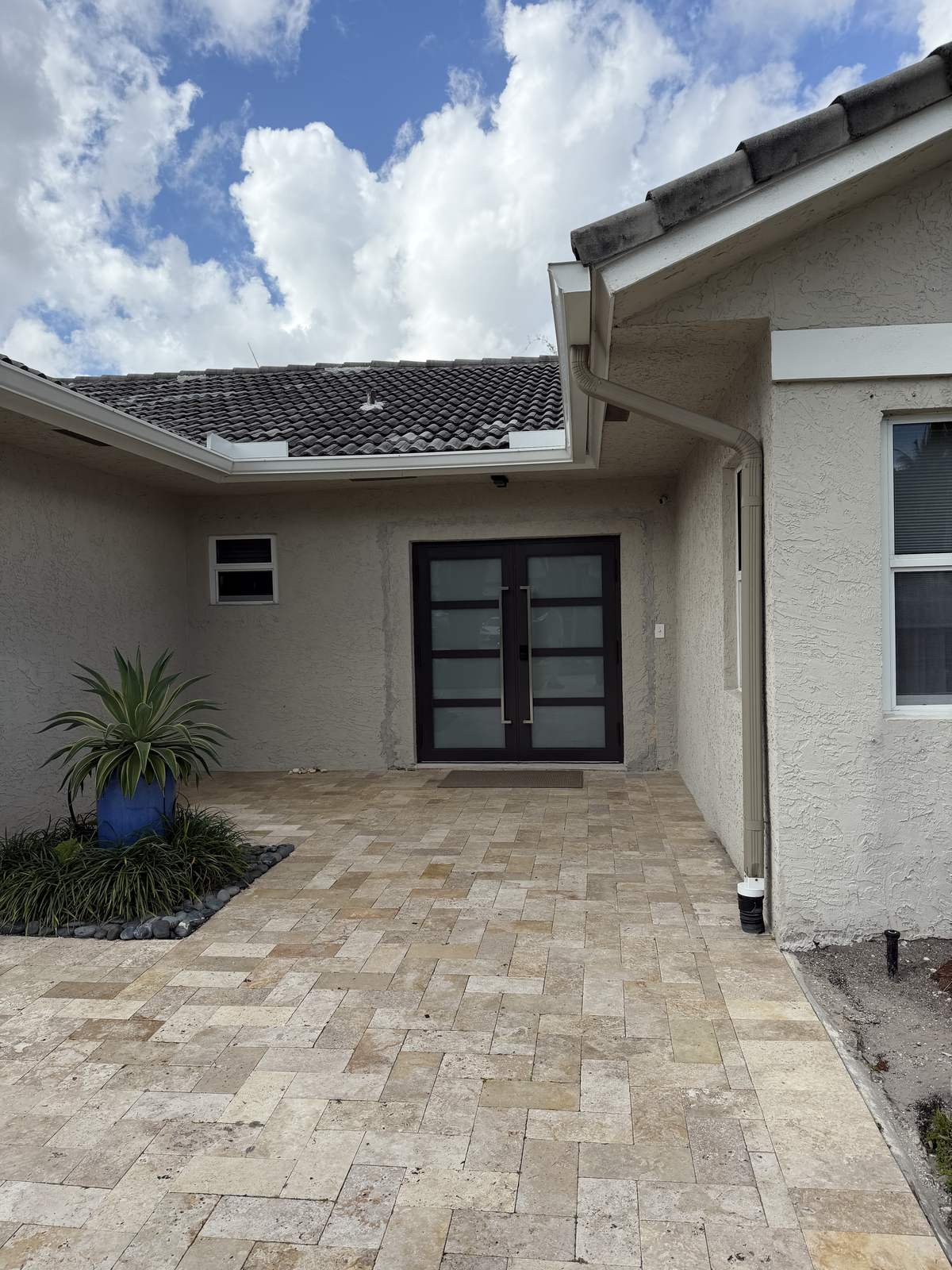
Bronze double entry doors with frosted glass 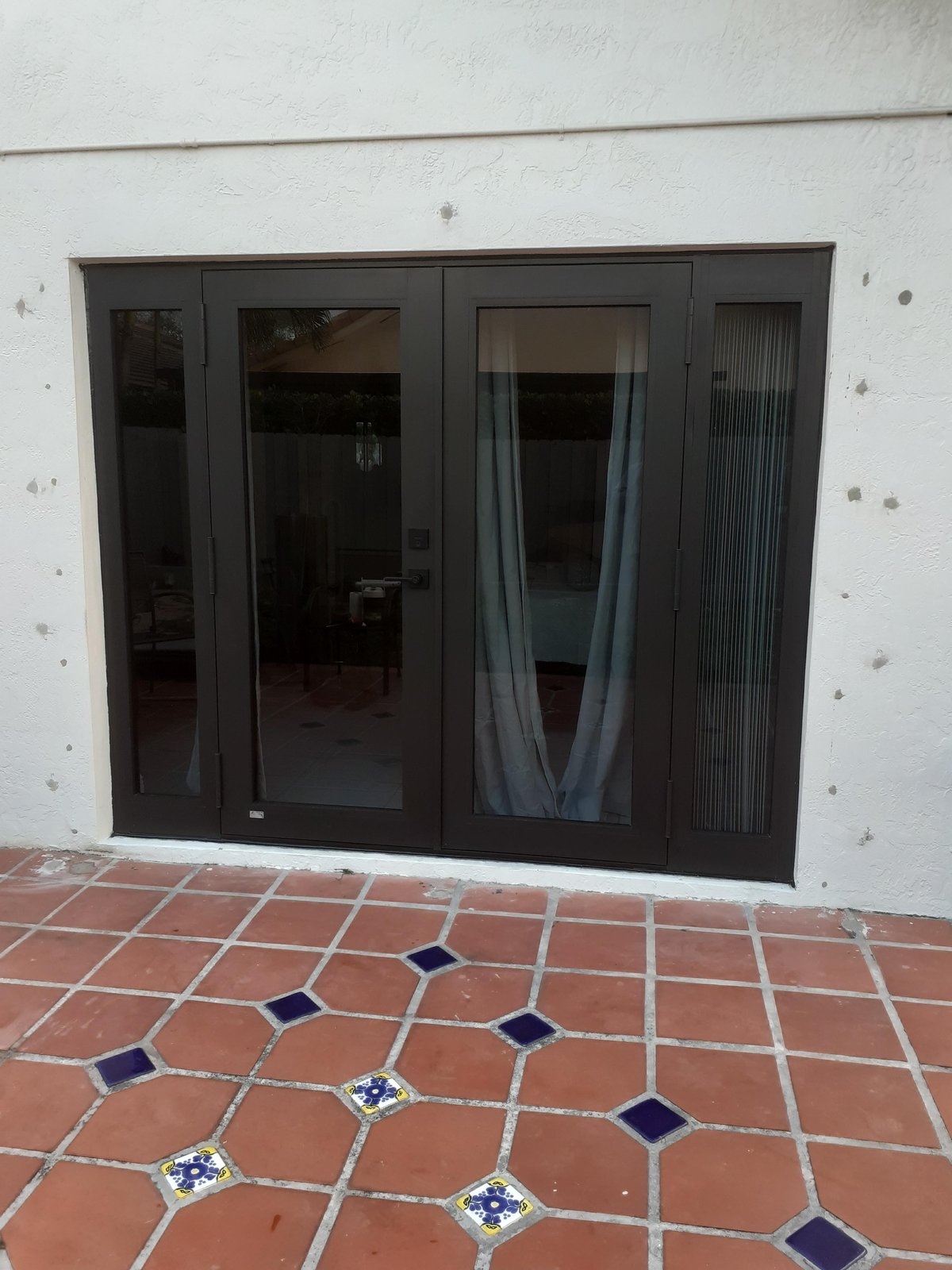
Bronze French door with sidelites 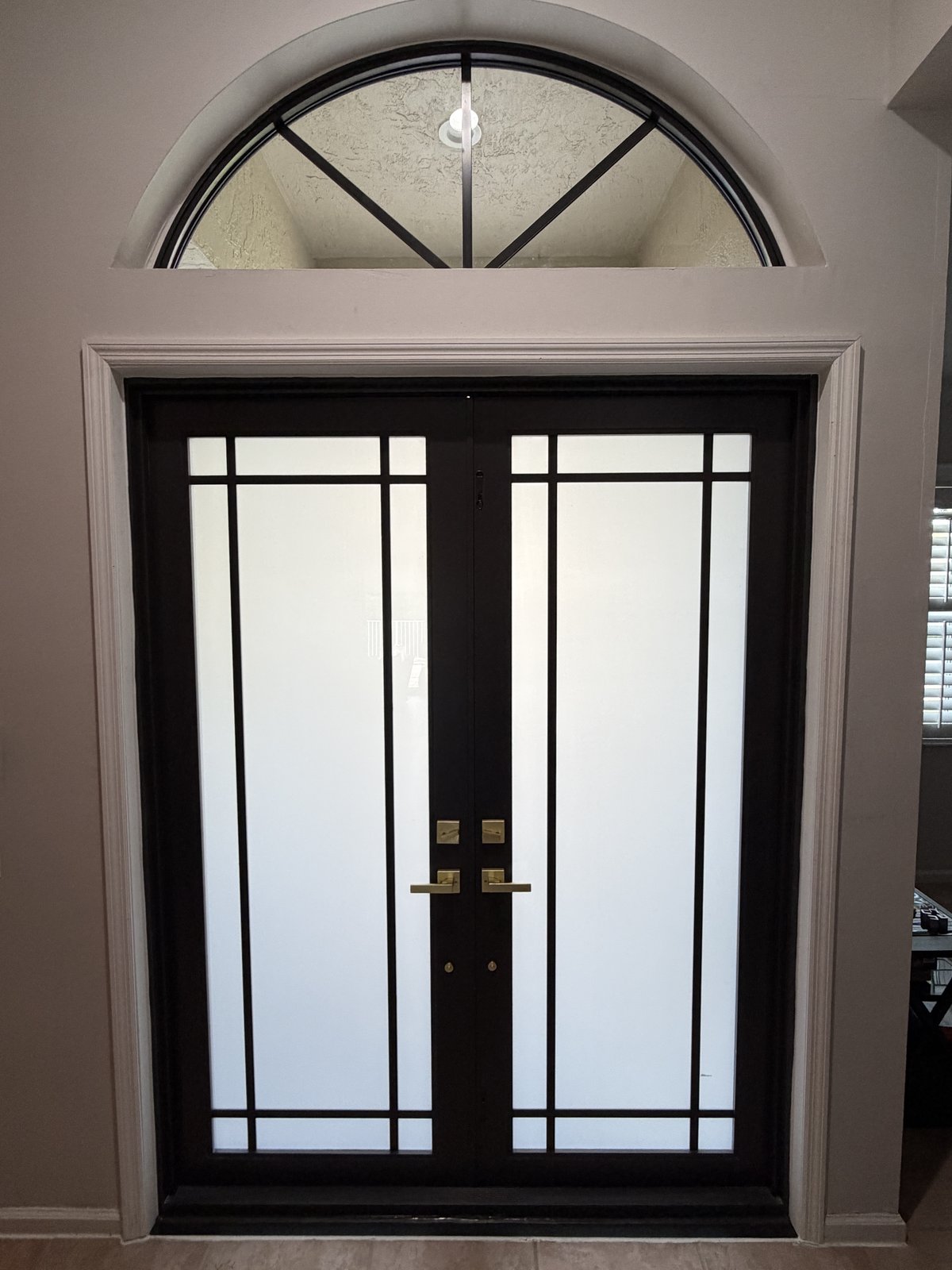
Black French doors with frosted glass and grids
Real photos from South Florida window and door jobs. They show completed or in-progress work — not a specific listing or product for sale.
Impact Entry, French, or Sliding: Which Door Type Fits Your Opening?
| Type | Best for | Watch out for |
|---|---|---|
| Impact entry door (solid or with glass) | Front door; privacy plus storm protection | Sidelights and transom must be approved as part of the same assembly |
| French impact doors | Wide openings and indoor-outdoor living | Two active leaves need approved hardware; check the size range in the approval |
| Sliding impact glass doors | Patios and lanais; large glass area | Track and threshold details; measure the full opening and check panel configuration (XO, OX, XOX) |
For patio and lanai openings, see our sliding glass door guide. Price ranges for each entry door configuration are listed in the cost section below and are shown as ranges, not quotes.
What to Measure Before You Order an Impact Door
- Rough opening width and height. Measure at the top, middle, and bottom and use the smallest number.
- Wall thickness (jamb depth). It affects the frame and trim you need.
- Swing direction. Inswing or outswing, and hinge side as seen from outside.
- Sidelights and transom. Measure each glass section separately and note whether they are fixed or operable.
- Threshold and floor. Note the finished floor height and any step or covered entry.
- Product approval. Confirm the NOA (or Florida Product Approval) covers your exact size and the design pressure your permit requires.
Common Mistakes When Buying an Impact Door
- Buying a door without checking its approval size range. An approved model is only approved for the sizes listed in its NOA.
- Mixing a new impact door with old non-impact sidelights. The assembly is approved together.
- Forgetting the hardware. Hinges, locks, and deadbolts must match the approved configuration.
- Assuming the decorative glass is impact glass. Ask for the approval that covers the exact glass option.
- Skipping the wind mitigation update. After installation, update your wind mitigation documentation so your insurer sees the new opening protection.
See Real Inventory and Prices
Windows Stock Market shows in-stock impact products with a price per item. Use the instant price tool or browse the marketplace for current availability. Doors with special sizes or glass may be custom orders, so confirm on the listing or in a written quote. We coordinate the permit process; see the permit guide, the ratings explained guide, the brand guide, and the cost guide.
Why Your Front Door Is Critical in a Hurricane
During a hurricane, the front door is one of the most structurally critical openings in your home. A failed entry door allows rapid pressure equalization — the sudden inrush of wind can destroy interior walls, blow out windows on the opposite side of the house, and in extreme cases, cause structural failure of the roof.
Largest single opening
Entry doors and their sidelights represent one of the largest glazed openings — and one of the biggest pressure points during a storm.
Structural anchor
Properly installed impact entry doors brace the surrounding framing. A failed door can compromise the structural integrity of adjacent walls.
Insurance requirement
A fully protected home (all openings impact-rated) is eligible for the full opening-protection credit on the hurricane-wind portion of your premium — the amount varies by insurer.
HVHZ Requirement: In Broward County and Miami-Dade County, any new or replacement entry door must be hurricane-rated — a Miami-Dade NOA certified impact door or an approved equivalent. Non-impact entry door installations are not permittable in these counties.
Impact Entry Door Types and 2026 Costs
Prices below include product, professional installation, permitting, and inspections. Retail pricing reflects standard market rate; WSM (Windows Stock Market) pricing reflects in-stock inventory pricing.
Single Impact Entry Door
Standard single-panel front door, 36" wide × 80" tall. Most common for single-family Florida homes. Available in steel, fiberglass, or wood composite.
Best for: Budget-conscious replacement; homes with simple entryway
Single Door with Sidelights
Single door flanked by vertical glass panels (sidelights). Adds natural light and curb appeal. Common in Mediterranean and traditional Florida architecture.
Best for: Grand entryways; homes with traditional architecture
Double Impact Entry Door
Two matching door panels, typically 60"–72" wide combined. Creates a grand entryway. Popular in luxury South Florida homes.
Best for: Luxury homes; wide entryways; architectural statement
Door with Transom
Entry door with horizontal glass panel above it. Adds height, light, and elegance. Common in newer South Florida construction.
Best for: Homes with high ceilings; modern/transitional style
French Impact Entry Doors
Two glass-panel doors that swing inward or outward. Maximum natural light. Requires impact glass throughout. NOA certified configurations available.
Best for: Coastal homes; indoor-outdoor living focus; luxury renovations
* WSM pricing applies to in-stock inventory. Custom sizes and premium finishes vary. Call (754) 303-7130 for a specific quote.
Steel vs Fiberglass vs Wood Impact Entry Doors
Steel Impact Doors
- ✓ Strongest against forced entry
- ✓ Lowest upfront cost
- ✓ Widely available in-stock
- ⚠ Can dent; vulnerable to salt corrosion if finish chips
- ⚠ Lower insulation than fiberglass
Fiberglass Impact Doors
- ✓ Corrosion-proof in salt air
- ✓ Better insulation than steel
- ✓ Won't dent; holds finish better
- ✓ Wide wood-grain finish options
- ⚠ 15–25% more expensive than steel
Wood / Wood Composite
- ✓ Highest-end appearance
- ✓ Excellent insulation
- ✗ Requires regular refinishing in FL humidity
- ✗ Can swell, warp in coastal environments
- ✗ Most expensive option
Vieser Construction recommends: Fiberglass impact doors for coastal and near-coastal South Florida properties. Steel for budget-conscious inland installations. Wood composite for luxury renovations where aesthetics are the priority and maintenance is acceptable.
HVHZ Requirements for Impact Entry Doors in Broward & Miami-Dade
South Florida's High-Velocity Hurricane Zone requires strict certification for all entry doors. Unlike Palm Beach County (which follows general Florida Building Code with some exceptions), Broward and Miami-Dade require Miami-Dade Notice of Acceptance (NOA) certification on every installed door.
HVHZ Impact Door Requirements
- →Must carry Miami-Dade NOA (Notice of Acceptance)
- →Must meet Design Pressure (DP) rating for installation location
- →All glass panels must use laminated impact glass (not tempered alone)
- →Frame must be tested as a complete assembly — not components separately
- →Professional installation to the approved method
- →Permit required for all entry door replacements
- →Inspection by county building department required post-installation
- →NOA number must be visible on product for inspector verification
- →Hardware (hinges, locks, deadbolts) must also meet testing standards
- →Wind mitigation form updated to reflect new door certification
What to Expect: Impact Entry Door Installation Process
Measure & Select
Vieser Construction measures your existing opening and recommends door size, material, and style. We provide a written quote within 24–48 hours.
Permit Application
We submit permit applications to your county building department (Broward, Miami-Dade, or Palm Beach). Permit approval typically takes 5–14 business days.
Product Procurement
We order your door from in-stock inventory (2–3 day delivery) or manufacturer stock (2–4 weeks for special configurations).
Installation Day
Certified installer removes your existing door, prepares the rough opening, installs buck frame if needed, installs impact door, seals, and caulks. Typical duration: 3–8 hours.
Inspection
County inspector verifies installation meets code. Vieser schedules and manages the inspection appointment.
Documentation
You receive a copy of the permit, inspection approval, and product NOA certification — everything needed for your insurance company and future wind mitigation inspection.
Ready to Replace Your Front Door?
Vieser Construction installs impact entry doors throughout Broward, Miami-Dade, and Palm Beach counties. All doors are Miami-Dade NOA certified. We handle permits, installation, and inspections — from free estimate to final sign-off.
Full project coordination · Miami-Dade NOA Certified Products · 3–4 Week Timeline
Frequently Asked Questions
Can I upgrade my front door to fiberglass and keep my existing sidelights?
It depends on whether your existing sidelights are impact-rated. In HVHZ counties, all glazed components — door and sidelights — must be NOA certified as an assembly. You typically cannot mix a new impact door with old non-impact sidelights; the entire assembly must be replaced together. Your installer will assess and recommend the appropriate scope during the estimate visit.
My HOA requires a specific door color or finish. Can I still get an impact door?
Yes. Impact entry doors are available in virtually all colors and finishes — standard colors plus custom paint matching. For HOA approval, you'll need to submit your door specifications (product data sheet, color chip) to your architectural review board. Most South Florida HOAs accept standard fiberglass and steel impact door finishes. Vieser Construction provides all product data needed for HOA submissions.
Does a wider door opening cost more?
Yes. Door cost increases with width because larger units require more material and different frame configurations. Standard 36" doors are the most affordable and widely available in-stock. 42" doors (common in newer South Florida construction) cost 15–25% more. Double doors (60"–72" combined) see the largest premium, both in product cost and installation complexity.
Can impact doors be outswing or inswing?
Both configurations are available and both can be NOA certified. Florida Building Code actually tends to favor outswing entry doors because outswing doors push against positive wind pressure during a hurricane (the wind pushes the door into its frame, helping the seal hold). Inswing doors can be used but require additional engineering to resist the pull-out forces during a storm. Most South Florida impact entry doors are outswing for this reason.
What is an impact entry door?
An impact entry door is an exterior door tested as a complete assembly (slab, frame, glass if any, and hardware) to resist hurricane wind pressure and flying debris. Any glass is laminated impact glass. In Miami-Dade and Broward it must carry a Miami-Dade NOA; elsewhere in Florida a Florida Product Approval is used.
What do I need to measure for an impact entry door?
Measure the rough opening width and height, the wall thickness (jamb depth), the swing direction (inswing or outswing, and hinge side viewed from outside), and the size of any sidelights or transom. Note the threshold type and whether the opening is in a covered entry. Your installer confirms the final size against the product approval before ordering.
Are French doors and sliding glass doors covered by the same rules as entry doors?
They fall under the same opening-protection rules: in the HVHZ the product needs a Miami-Dade NOA, with a design pressure that meets your permit requirement. Sliding and French doors are tested and approved by model and size, so check the approval for the exact unit you are ordering.
Can I see real impact door and window prices before I request a quote?
Windows Stock Market shows in-stock impact products with a price per item. Use the instant price tool or browse the marketplace to see current availability. Door pricing depends on size, glass, and configuration, so treat any range as a starting point and confirm on the listing or in a written quote.